

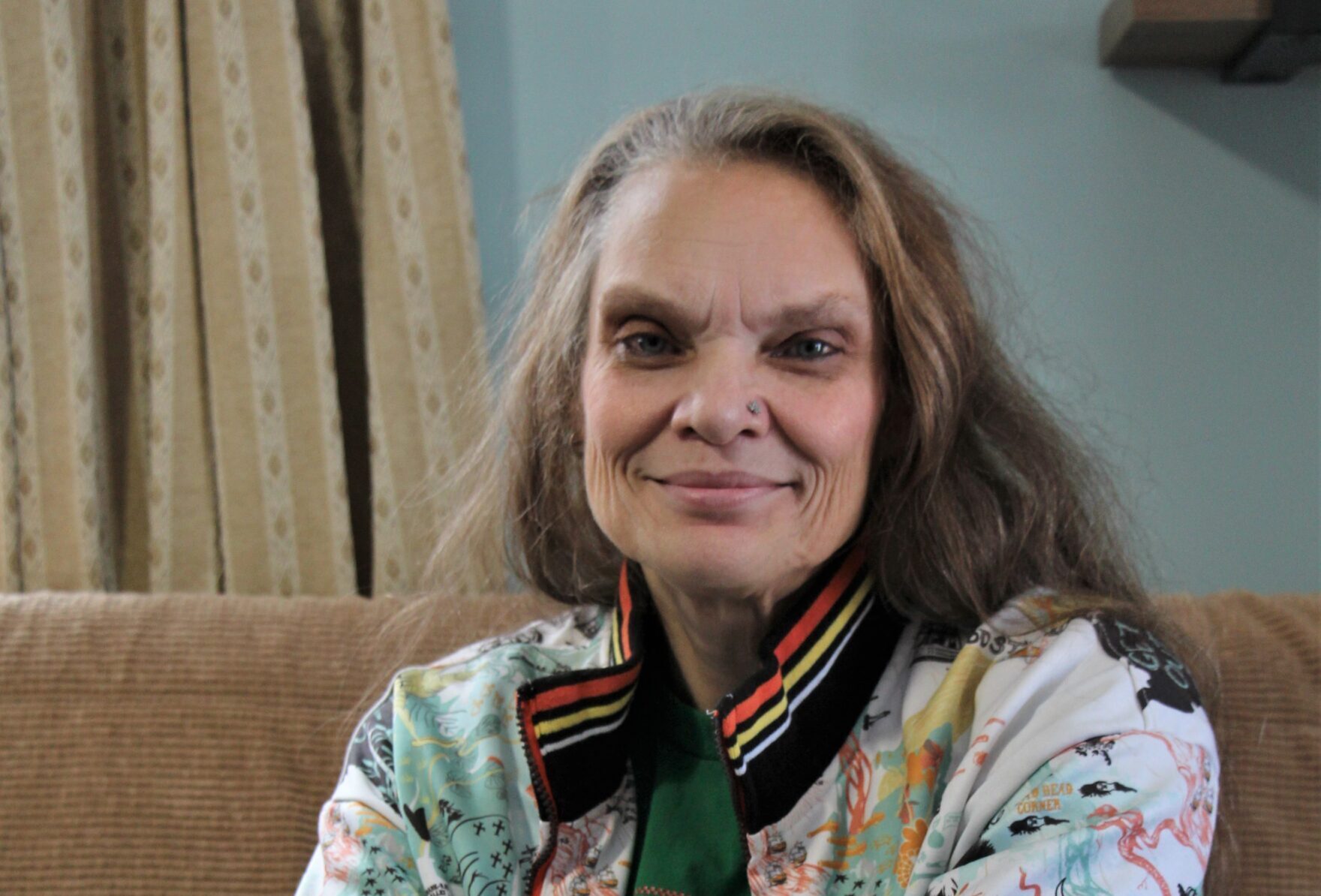
On a quiet street in Penetanguishene, Joanne Reynolds is learning how to imagine a future again. When not working as a custodian with the public school board, her days are filled with caring for her cats and settling into her recently purchased home. She wouldn’t yet say she’s happy, but, for the first time in a long while, she can picture it.
“This is a new beginning,” she said. “I just have to get there, right? One day at a time.”
That sense of cautious hope comes after decades of living with depression and a care journey that, just months ago, brought her to a critical turning point. Approaching her 60th birthday, Joanne credits the Waypoint At Home program with helping her feel supported and begin moving forward.
“They helped my heart,” she said simply. “They were there when I needed them.”
Joanne grew up in Bradford on a small farm with five siblings. Life looked steady on the surface, but she struggled. Her high school years were marked by a persistent sadness and a feeling that she didn’t belong.
They helped my heart. They were there when I needed them.
Joanne
Joanne grew up in Bradford on a small farm with five siblings. Life looked steady on the surface, but she struggled. Her high school years were marked by a persistent sadness and a feeling that she didn’t belong.
“I would go to bed sad, go to school sad,” she recalled. “I felt suicidal, but I just fought through it somehow.”
She finished high school, married and had her first son at 19, followed by a daughter a couple of years later. Joanne stayed home with her children for five years, but her mental health challenges continued. After divorcing, moving to Barrie, remarrying and settling in Phelpston, she welcomed two more children. With each birth came bouts of post-partum depression.
Over the years, she sought help where she could — speaking with a social worker, trying multiple medications — but relief was short-lived. Eventually, her condition worsened to the point that she was hospitalized, not eating properly and plagued by suicidal thoughts.
“Even though you’re still doing normal, everyday things, it doesn’t feel happy or joyful,” she said, noting she once went 17 years without looking at herself in a mirror.
In May 2025, after several traumatic life experiences, Joanne experienced another severe mental health crisis. When her adult children couldn’t reach her, they called for emergency help. She was taken by ambulance to Georgian Bay General Hospital, where she stayed for several days before being transferred to Waypoint.
Her care journey at Waypoint began on the Swing Unit, where she spent several weeks receiving treatment for depression and sleeplessness. Joanne describes the experience as supportive and structured.
“It was really good. You have your own room with a bathroom, and they feed you well,” she said. “They have little group sessions during the day. And you can do activities outdoors, watch TV, watch movies — a lot of interactions with other patients, which is helpful because you see you’re not alone.”
As her discharge approached, Joanne insisted she didn’t want to leave without a solid plan for continuing care in the community. That’s where Waypoint At Home came in. The community-based program supports patients in their own homes after they leave Waypoint. Services are offered by Bayshore Integrated Care Solutions and can include care co-ordination, nursing, mental health and addiction support, behaviour therapy, personal support and social work, as well as help with homemaking or connecting to community resources.
Joanne met with the Waypoint At Home Care Co-ordinator to create a personalized plan that would be followed by her care team once she was discharged. Her first home visit with a nurse was scheduled before she even left the hospital. Over the next 14 weeks, team members visited twice a week to monitor her medications, diet and vital signs, assess her home environment and offer emotional support.
[Allison and Debroah] listened, didn’t judge, consoled, sat with me. They wanted to know if I felt safe with my thoughts and to call any time if I wasn’t.
To measure Joanne’s progress, care providers used the Canadian Personal Recovery Outcome Measure (CPROM). The CPROM is a tool designed to support conversations about recovery and track changes over the course of a program, including areas not always addressed in traditional mental health assessments. Joanne’s pre-engagement CPROM score was 13.75; after completing the program, her score rose to 24.75 — indicating a substantial and clinically significant improvement in her overall recovery.
The numbers are a reflection of Waypoint At Home’s positive impact on Joanne: “It let me look forward — that somebody cared enough to come listen to me.”