People living with treatment-resistant depression across Central Ontario now have improved access to a safe, non-invasive and evidence-based treatment option as Waypoint Centre for Mental Health Care takes on a new regional leadership role for repetitive transcranial magnetic stimulation (rTMS).
Under the leadership of Premier Ford, our government is taking bold and innovative action to strengthen Ontario’s mental health care system. Our province-wide expansion of rTMS, which is backed by an over $5 million investment, will ensure thousands of patients experiencing treatment-resistant depression can get the care they need, where and when they need it.
Sylvia Jones, Deputy Premier and Minister of Health
The publicly funded rTMS program is available through Ontario’s Neurostimulation Procedures Provincial Program, supported by a recent provincial investment of $5.4 million to expand access to treatment for adults with treatment-resistant depression across Ontario. Approximately $321,585 has been allocated to support service delivery at Waypoint Centre for Mental Health Care. Ontario Health is leading implementation of the program through its Mental Health and Addictions Centre of Excellence.
For many people living with depression, medication and psychotherapy can be effective treatments. But for about 30% of people with major depression, symptoms persist despite receiving these interventions. For those individuals, rTMS offers another evidence-based treatment option. The ability to expand access to this service for the Simcoe Muskoka community is something we are grateful for.
Dr. Katherine McKay, Medical Director, Neuromodulation, Integrated Ambulatory and Child & Youth Services
Individuals living with treatment‑resistant depression often experience significant challenges after several unsuccessful treatment attempts. Coordinated regional access to rTMS ensures more timely and appropriate care while simplifying what can otherwise be a complex referral pathway.
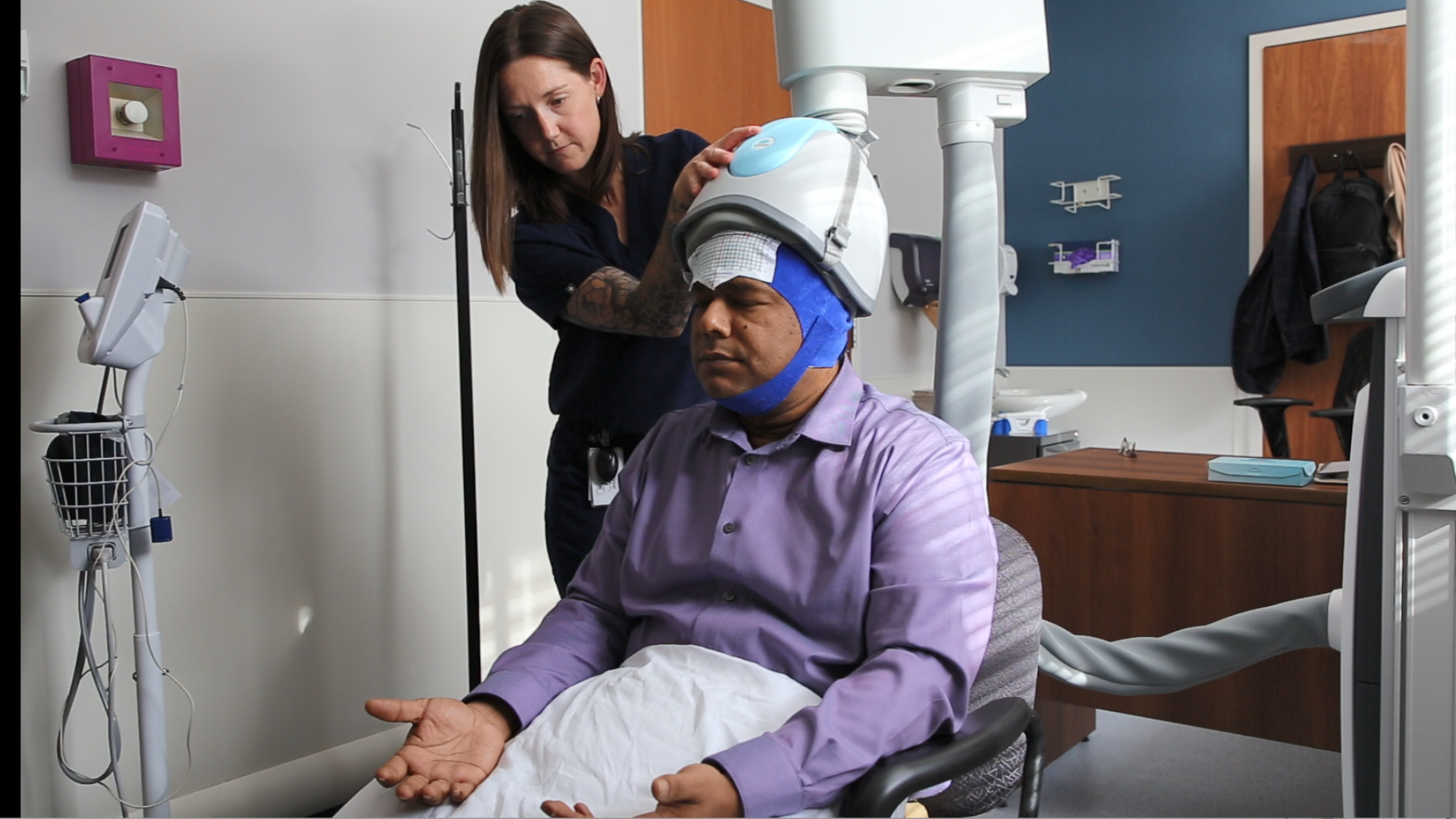
rTMS is a safe, non-invasive treatment that uses magnetic pulses to stimulate areas of the brain involved in mood regulation. Treatment is typically provided over 30 sessions across six weeks, and does not require anesthesia or recovery time. Research has shown it can significantly improve symptoms for many people whose depression has not responded to medication or psychotherapy.
The rTMS program is currently operational at Waypoint, and individuals do not need to be admitted as inpatients to access this treatment. The program is available to eligible adults referred to the program by a physician, psychiatrist or nurse practitioner.
For more information about the rTMS program, including referral information, visit: